By 1990 Roger Milla had retired from international football. He was 38. Then Cameroon's president phoned him personally and asked him to come back for the World Cup in Italy.
Milla said yes, and the rest of the world got to know him.
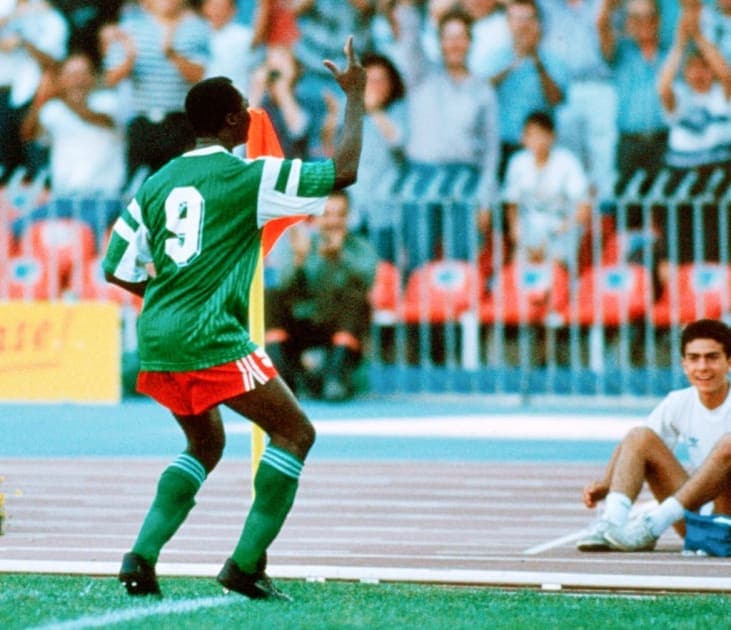
Coming off the bench, he scored four goals and helped the Indomitable Lions to a historic quarter-final appearance. Each time he scored he ran to the corner flag and danced, hips swaying, a man clearly enjoying himself. The Milla shuffle became famous around the world almost overnight, and it has been copied ever since.
Did Milla stop there?
No. He came back again in 1994, at 42, and scored once more. That made him the oldest goalscorer in World Cup history.
For a player who had already retired once, it was a remarkable second act. Milla is widely regarded as the godfather of modern African football, less for the goals themselves than for the generation of African players who watched him in 1990 and believed they could do the same.
Why the dance ranks at number 7
Because it gave African football a face, and the face was smiling. A 38-year-old called out of retirement, scoring from the bench and dancing at the corner flag while his country reached the quarter-finals: it is hard to think of a happier story from any World Cup. African players have been imitating the celebration ever since, and it still turns up on pitches across the continent.
Tomorrow: number 6.