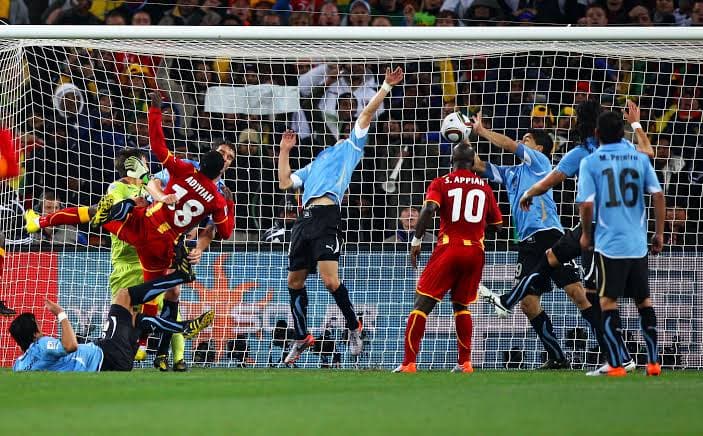
Soccer City, Johannesburg, 2 July 2010. The last minute of extra time in the quarter-final between Uruguay and Ghana.
The context matters. It was the first World Cup held on African soil, and Ghana were the last African team left in it. One more goal and they would become the first African side in history to reach a World Cup semi-final.
Dominic Adiyiah's header was heading in. Luis Suárez, standing on the goal line, stuck out his hand and stopped it.
Red card. Penalty to Ghana. Asamoah Gyan stepped up and smashed it against the crossbar.
What happened after Gyan's miss?
The match went to penalties, and Uruguay won the shootout 4-2. Ghana were out in the quarter-final, and so was Africa's last team at its own World Cup.
Suárez, meanwhile, had been celebrating on the touchline as if he had scored the winner. That celebration, more than the handball itself, is what turned him into a villain across the continent. A deliberate handball to save a goal is a desperate act. Cheering it afterwards is something else again.
Why the Suárez handball still stings
- the stakes: a first African semi-final, at the first African World Cup
- the timing: the final minute of extra time
- the miss: Gyan's penalty against the bar
- the ending: a 4-2 shootout defeat
The Black Stars were about 60 seconds away from making history. Suárez's cheating and his celebration of it made him football's biggest villain on this continent, and plenty of people across Africa have not let it go.
Tomorrow: number 10.