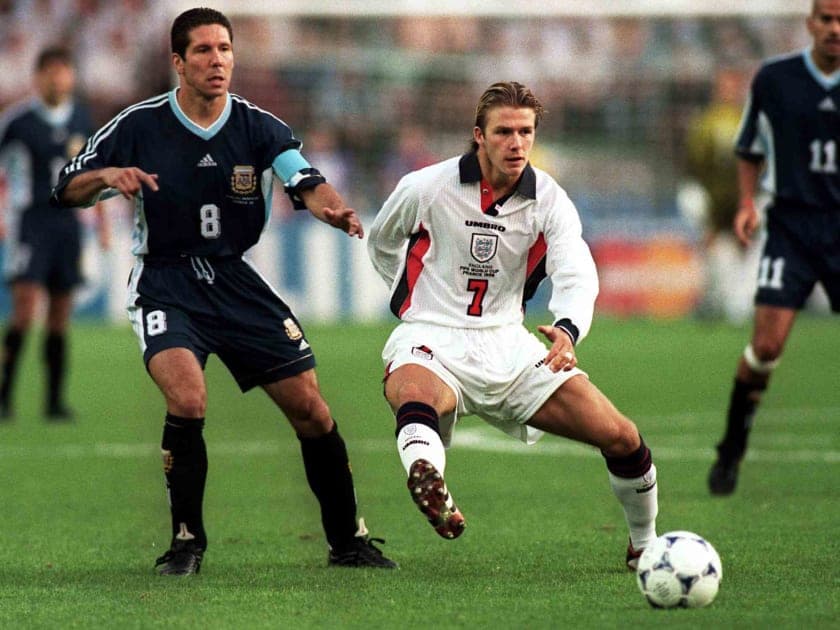
In 1998, David Beckham was the most hated man in England. By 2002 he was the country's hero, and the opponents were the same both times.
Saint-Étienne, 1998, round of 16. The young Manchester United star kicked out at Diego Simeone after a foul and was sent off. England lost on penalties. Back home, an effigy of Beckham was burned outside a pub, and he became public enemy number one.
Four years later, the draw for the 2002 World Cup put England and Argentina in the same group. They met in Sapporo, Japan. In the 44th minute England won a penalty and Beckham took it. He buried it, and England won 1-0.
Why Beckham's Sapporo penalty matters
Plenty of players score penalties against Argentina. What made this one different was the four years in between: the abuse, the criticism, the effigies. All of that went into one kick, and the look on Beckham's face as he ran away to celebrate said more than any post-match interview.
By one count it took 1,438 days to go from villain to hero, which is quick work in English football, where grudges usually last longer.
- 1998: sent off in the round of 16 against Argentina in Saint-Étienne, England out on penalties
- 2002: faced Argentina again in the group stage in Sapporo
- The penalty: 44th minute, the only goal of the game
It stands as one of the great personal redemption stories football has produced.
Tomorrow: number 29.