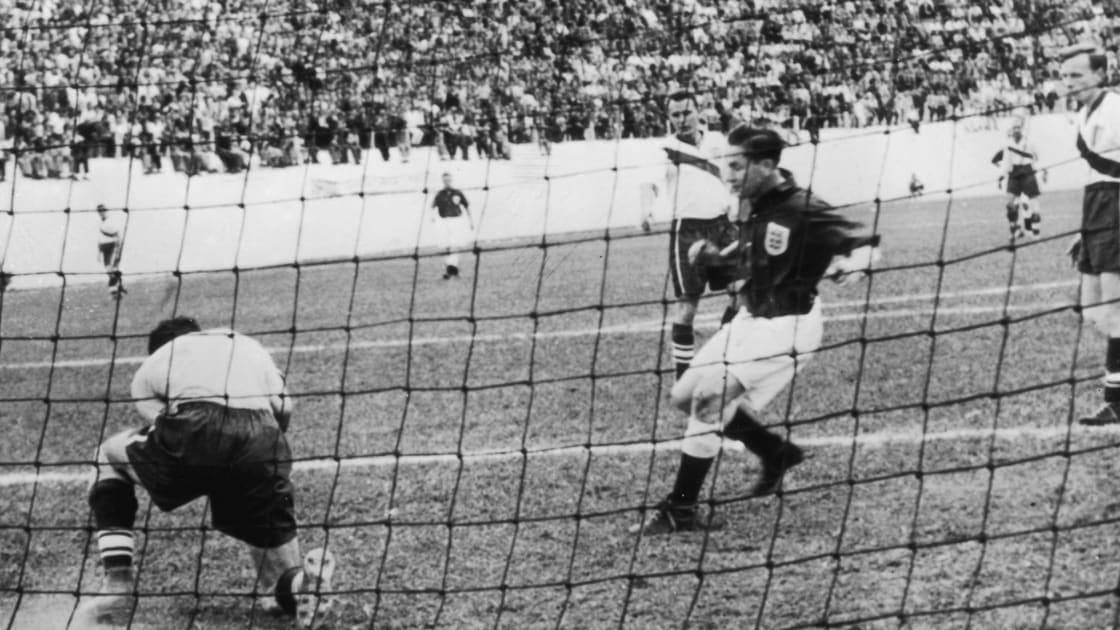
In 1950, the United States sent a team of amateurs to the World Cup in Brazil. Postmen, schoolteachers, dishwashers, factory workers. They had lost their previous seven internationals by a combined 45-2.
England, meanwhile, were considered the strongest team in the world and were overwhelming favourites to win the tournament.
They met at the Estádio Independência in Belo Horizonte. In the 38th minute Joe Gaetjens, born in Haiti, got his head to the ball and scored. The Americans then spent the rest of the afternoon defending, and they held on. USA 1, England 0.
Did newspapers really think it was a typo?
That is the story that has stuck. The result was so hard to believe that British newspapers reportedly assumed it was a mistake, and some accounts say the score was printed as "USA 10-1 England". Whatever the exact truth, it shows how far outside the expected range the result was.
The defeat helped send England out of the 1950 World Cup.
Why it is still the benchmark upset
- The gap: part-timers against the side that invented the game
- The form: seven straight defeats and a 45-2 aggregate going in
- The scorer: Gaetjens, whose header decided it
- The consequence: England went home early
It is regularly named the biggest upset in World Cup history. The match was so shocking that even the people who reported it struggled to accept it, and it is still the reference point whenever an underdog beats a giant.
Tomorrow: number 24.